

1973: "The Mother and the Whore". and “Blow-out” shock Cannes
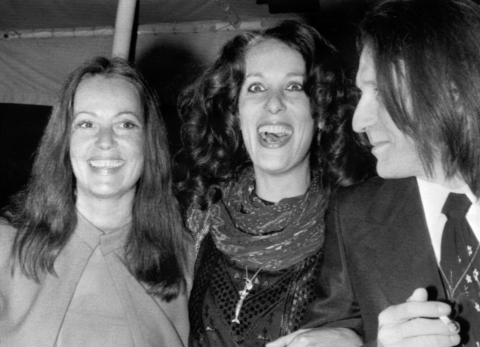
In 1973, the selection of French films created shockwaves at the Cannes film festival. Coarse and provocative, Jean Eustache’s “The Mother and the Whore” and Marco Ferreri’s “Blow-out” went down in history as one of Cannes’ legendary scandals.
The two films shared the International Critics Prize and « The Mother and the Whore” the Grand Prix. Here are AFP’s reports on the two screenings:
CANNES, May 17 (AFP) – The battle of Cannes has taken place. Two thousand years after Hannibal defeated the Romans in Latin-era Cannes, a more rhetorical than deadly battle took place this evening on the Croisette at the end of the screening to the dressed-up audience of Jean Eustache’s “The Mother and the Whore” which had already on Wednesday morning divided critics.
To a packed room, all in tuxedos and evening dresses, they watched for a long while without batting an eyelid at the verbal, often very crude, outpouring of the film, before reactions or appreciation broke out. At no point was the film’s projection stopped. Some cried “Scandal!”. « It’s a masterpiece », others retorted.
As the audience left the theatre, (a quarter had already left) there was also a crush, which more resembled a sports event than a gala and a clash of whistles and applause unheard since the screening in Cannes of de « L'avventura » by Antonioni.”
Later that evening, “old timers” and “modernists” » stuck to their positions, launching offensives and counteroffensives as wordy as the dialogue, which was central to “The Mother and the Whore” which would remain the highlight of the 1973 festival pending what promised to be an even more animated projection of “Blow-out” by Ferreri.
-----------------------
CANNES, May 21, (AFP)- Whistles, boos, some applause marked on Monday the end of the premiere of “Blow-out” at the Cannes Film Festival.
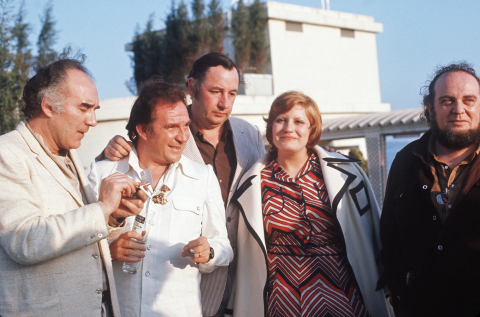
Jury president Ingrid Bergman remained stone-faced as she left the auditorium, responding only with a forced smile to those who asked her to give her impressions. Novelist Paul Vialar took his time before saying, tongue in cheek, that in the film “There is much too much to eat for my taste”.
English visitors expressed surprise, saying they did not know the French were like that, while one American commented “the director did not really make the best of his subject, this film is not as happy as it should be.».
The news conference given a few minutes later by Marco Ferreri, surrounded by all his actors, was rowdy and tense. After stressing that his film did not have a message, that he had just wanted to tell the story of four men who decided to lock themselves in a house to eat themselves to death and that everyone was free to interpret the film as they saw fit, he said nevertheless that his characters live in a society which holds no hope to its members.
“The story takes place in Paris, but it could be New York or any other western city, I work within the system and the only thing I can do is to demonstrate that our society is repressive. In telling this story I wanted to say that society is frightening and to remind that before being a thinking machine mankind is a physiological being.”
Michel Piccoli commented: “the film portrays a rut, panic, faced with life that all feel. Food, sexual liberation are meant to put people to sleep. We wanted to show how far this anaesthesia could go.”